
Proper teak furniture care is the secret to transforming a beautiful purchase into a lifelong investment. A piece of high-quality teak outdoor furniture is more than just an object; it is a commitment to enduring style and comfort, crafted from the world’s most durable timber to grace your outdoor spaces for generations.
While Grade-A teak is legendary for being incredibly low-maintenance, a proper care philosophy will ensure your investment remains structurally sound and visually stunning for decades to come. As expert manufacturers from Jepara, we want to share our complete guide to caring for your furniture. This is not just about cleaning; it’s about understanding the wood, making informed choices about its appearance, and knowing how to handle any issue that may arise over its long life.
This guide will cover everything you need to know about routine maintenance, protecting and finishing your furniture to your desired look, and handling advanced repairs.
Part 1: Routine Maintenance – The Foundation of Longevity
The key to keeping your teak furniture looking its best is simple, consistent care. These routine tasks are all that’s needed to maintain its beauty year after year, preventing the buildup of dirt that can mar its appearance.
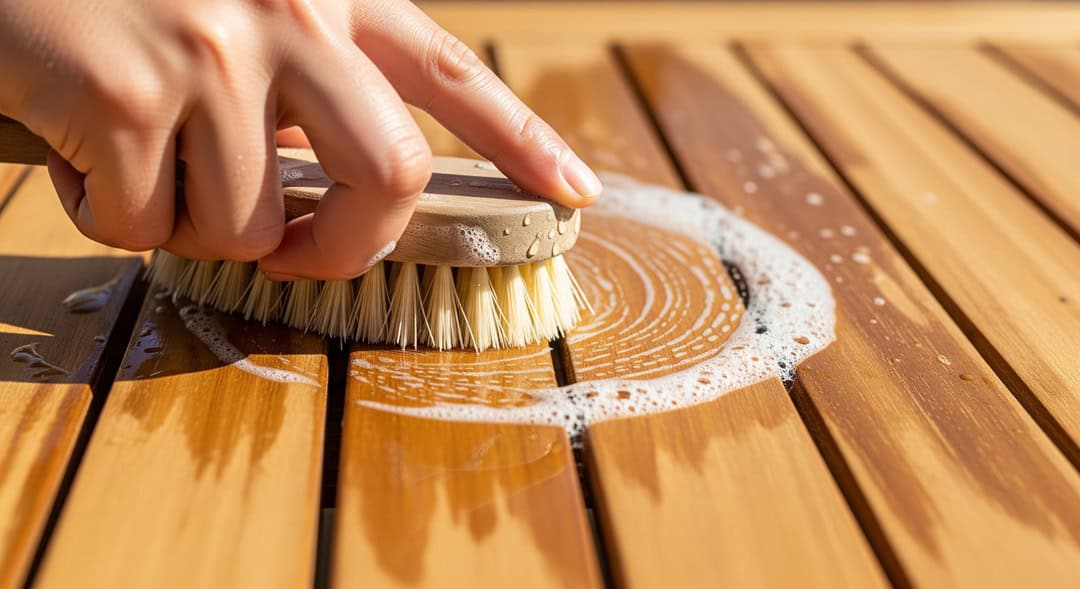
Basic Cleaning For general cleaning, all you need is a bucket of mild soapy water (a few drops of dish soap in water is perfect) and a soft-bristle brush. Harsh chemical cleaners or pressure washers should be avoided, as they can damage the wood fibers and strip the natural protective oils. Gently scrub the surface of the furniture to remove everyday dirt, pollen, and grime, always moving in the direction of the wood grain to avoid cross-grain scratching. Once clean, rinse the furniture thoroughly with fresh water to remove all soap residue, which can attract more dirt if left behind. For a more detailed walkthrough, see our 6 steps to clean old wood furniture by yourself.
Dealing with Common Stains & Issues Life happens, and spills are inevitable. For most food or drink stains, the basic cleaning method above is sufficient if done promptly. For tougher spots like grease, wine, or mildew, a specialized commercial teak cleaner may be needed. You can find a variety of solutions in our guide on 11 simple and safe methods to remove wood stain. For other specific issues, we have detailed guides on how to remove permanent marker from wood and remove stickers from wooden furniture.
Caring for Cushions & Accessories Your cushions are a key part of your furniture’s comfort and appearance. Most high-quality outdoor fabrics, such as those from Sunbrella®, are designed to resist mildew and stains. For routine cleaning, simply brush off loose dirt and wipe with a damp cloth. For more stubborn stains, a simple solution of mild soap and water is usually effective. For detailed instructions from a leading fabric manufacturer, you can visit the official Sunbrella® Cleaning Guide. For our own tips, please refer to our guide on 5 effective methods for cleaning outdoor cushions.
Part 2: Protecting & Finishing – A Guide to a Lasting Look
How your teak furniture ages and looks over time is a matter of personal preference. Your approach to teak furniture care in this regard will define its aesthetic for years to come.
To Patina or Not? Understanding Natural Weathering Left to the elements, teak will undergo a beautiful, natural transformation. The original golden-honey color will slowly fade over 9-12 months, replaced by an elegant, distinguished silver-grey patina. This is a purely cosmetic change caused by the oxidation of the very top layer of wood from sun and rain. It is not rot or decay; in fact, this silver layer acts as a natural protectant for the healthy wood underneath. Many owners cherish this look as a sign of authentic, high-quality teak that requires no maintenance at all beyond basic cleaning.
Sealing, Oiling, and Varnishing If you prefer to maintain the “new” golden-brown color, applying a finish is the way to go.
- Teak Sealer (Recommended): This is the modern, professional choice. A high-quality teak sealer creates a breathable, UV-protective barrier that prevents the wood from graying while maintaining its natural feel. It’s the most effective way to seal and protect your teak wood.
- Teak Oil: A traditional method, oiling replenishes some of the surface oils and gives the wood a rich, warm glow. However, it is a high-maintenance option, requiring frequent reapplication (often several times a year), and can attract mildew in humid climates as the oil can trap dust and spores.
- Varnish: Varnish creates a thick, glossy, plastic-like film on the surface. While very durable, it completely changes the feel of the wood and can be difficult to repair if it chips or peels, often requiring a full strip-and-refinish. Learn about the differences between varnish and stain and explore popular varnish colors in our guides.
Staining and Painting for a Custom Look For a complete color transformation, staining or painting are great options. Staining adds color while allowing the natural wood grain to show through, while painting provides a solid, opaque finish for a bold, modern look. We have detailed guides on the 9 easy steps for staining teak furniture and the complete process for painting teak outdoor furniture.
Part 3: Advanced Repairs & Restoration
Even the most durable furniture can suffer from wear and tear over a long life. Here’s how to handle more significant issues with a proper teak furniture care approach.
Repairing Minor Cracks and Checks Small, hairline cracks (often called “checks”) can appear on the surface of the wood as it expands and contracts with changes in humidity. This is a normal part of the wood’s character and does not affect its structural integrity. For any cracks that you wish to fill for aesthetic reasons, a flexible, color-matched wood filler or a high-quality two-part epoxy can be used. For a complete walkthrough, see our guide on repairing cracks in teak furniture.
Dealing with Scratches and Dents For minor scratches, a light sanding with fine-grit sandpaper (220-grit or higher) is often all that is needed to smooth the surface. Always sand with the grain. This is also an effective method for damage caused by pets, which we cover in our guide to protecting furniture from pet scratches.
The Complete Refinishing Process For a very old piece of furniture that is heavily weathered or has an old, failing finish, a complete restoration can bring it back to its original glory. This process involves stripping the old finish, thoroughly sanding the entire piece to reveal fresh wood, and applying a new protective sealer or finish. It’s a rewarding project that can make a decades-old piece look brand new. We have two detailed guides on the 10 steps to refinishing wood furniture and a more focused 5-step guide to refinish old teak furniture.
Part 4: Pest Prevention
One of the greatest advantages of Grade-A teak is its natural resistance to insects. The dense oils and silica in the heartwood are a powerful deterrent to wood-boring pests like termites. While your furniture itself is safe, it’s always good practice to maintain your garden and patio area to prevent infestations. For more information, you can read our tips on how to prevent termites in wood furniture and how to spot the signs of termites.
Conclusion: A Partnership in Care
The philosophy of effective teak furniture care is simple: consistent, gentle attention is the key to lifelong beauty. By performing routine cleaning and choosing the right finish for your lifestyle, you can ensure your investment remains a source of pride and comfort for generations.
Of course, the best foundation for a long-lasting piece of furniture is quality from the very start. By choosing furniture made from properly kiln-dried, Grade-A teak with expert craftsmanship, you are ensuring a lifetime of minimal maintenance and maximum enjoyment.
0 Comments