
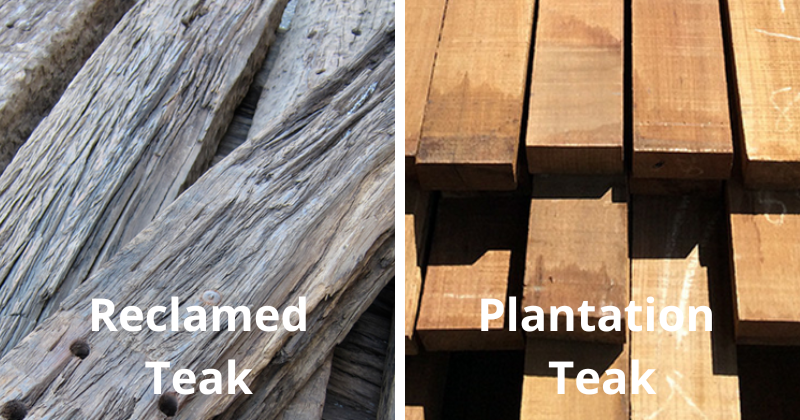
When shopping for high-quality garden furniture, understanding the differences between Reclaimed Teak vs Plantation Teak is essential. Teak wood (Tectona grandis) has held the crown in the woodworking world for centuries. Prized for its exceptional durability, stunning golden-brown grain patterns, and natural resistance to decay, it is widely considered the gold standard for high-end furniture, particularly for outdoor use.
However, the global timber market has shifted. With growing concerns about deforestation, climate change, and environmental sustainability, the source of this precious wood matters more than ever. Today, consumers navigating the market must weigh the pros and cons of Reclaimed Teak vs Plantation Teak to make the right choice.
While both materials share the same biological DNA, they are vastly different in terms of history, aesthetics, structural integrity, and environmental impact. As a consumer prioritizing both luxury and responsibility, understanding these differences is essential.
In this comprehensive guide, we delve deep into the world of teak. We will explore the origins of reclaimed wood in Indonesia, compare it strictly against plantation teak, analyze the benefits and downsides, and explain why reclaimed teak might just be the best decision you make for your patio or garden.
Part 1: What Exactly is Reclaimed Teak?
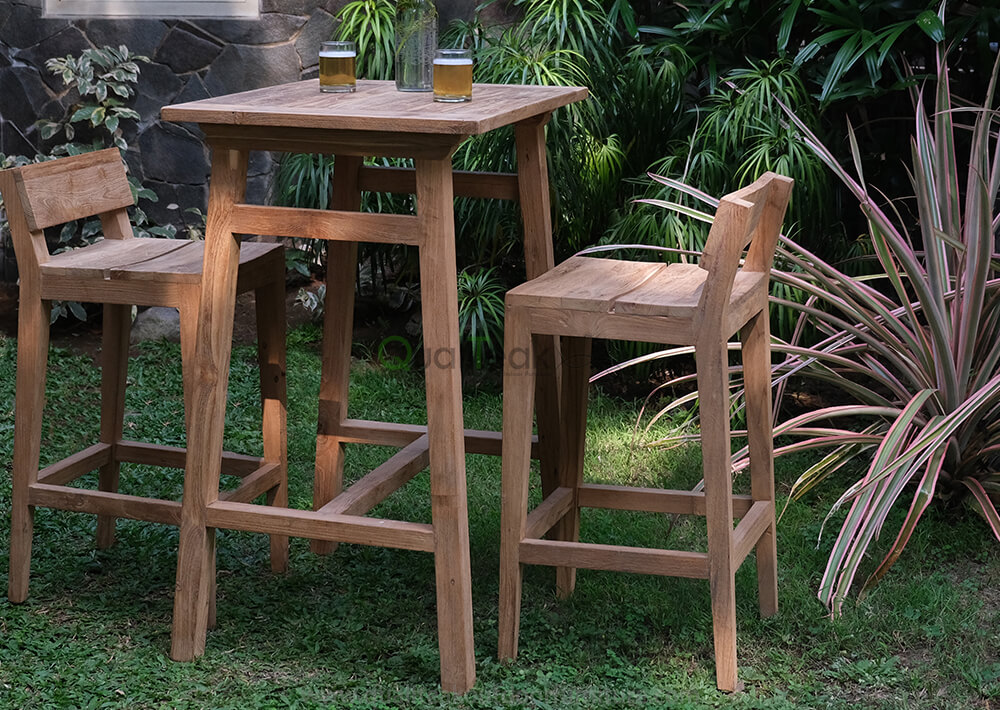
To understand the value of reclaimed teak, one must first understand its journey. Unlike fresh timber harvested from a forest or a farm, reclaimed teak is wood with a past life.
The Origins: A Story in Every Plank
Reclaimed teak is sourced primarily from old structures that are being dismantled. In Indonesia, specifically in regions like Central Java and Jepara, teak has been the primary building material for centuries. It was used to construct traditional houses (such as the Joglo or Limasan), bridges, railway sleepers, and even boats.
When we talk about “reclaimed” furniture, we are not talking about rotting wood salvaged from a dump. We are talking about structural timber—beams and pillars—that have stood strong for 50 to 100 years (or more).
When these old structures are eventually renovated or demolished to make way for modern concrete buildings, the teak wood is not discarded. Instead, it is salvaged. The wood is carefully dismantled, denailed, cleaned, and given a second life as furniture.
Is it “Recycling”?
Yes, in the truest sense. Think of it like recycling an aluminum can or a glass bottle, but with a material that actually improves with age. By purchasing reclaimed teak furniture, you are essentially preventing valuable resources from ending up in a landfill (or being burned) while simultaneously reducing the demand for cutting down new trees.
Part 2: Reclaimed Teak vs Plantation Teak – The Showdown

To make an informed decision in the Reclaimed Teak vs Plantation Teak debate, we must compare the historical wood against its modern counterpart.
Plantation Teak, also known as farmed or cultivated teak, comes from government-managed forests specifically planted for harvesting. While this is a more sustainable option than illegal logging of wild forests, there are significant differences when compared to reclaimed wood.
Here is the detailed breakdown of the differences:
1. The Age and Quality of the Wood
- Reclaimed Teak: This wood often comes from trees that were harvested over a century ago. Back then, the trees were allowed to grow wild and mature fully (often 50-80 years old) before being cut. This resulted in huge logs with very tight cambium rings (growth rings). The tighter the rings, the denser and stronger the wood.
- Plantation Teak: These trees are often harvested much younger (sometimes as early as 20-30 years) to meet market demand. As a result, the growth rings are spaced further apart, making the wood slightly less dense and softer than its ancient counterpart.
2. Moisture Content and Stability
- Reclaimed Teak: This wood has been naturally air-drying for decades. It has been exposed to the tropical sun, rain, and wind for generations as part of a house. The result? It is incredibly stable. The moisture content is practically zero. It has done all the “moving” (expanding and contracting) it is ever going to do, meaning it is virtually immune to warping or shrinking in your garden.
- Plantation Teak: Even with modern kiln-drying processes, new wood retains a higher level of internal “tension.” As it acclimates to your local climate, plantation teak is more prone to slight shifting, checking, or warping compared to the rock-solid stability of ancient reclaimed wood.
3. Aesthetics and Color
- Reclaimed Teak: No two pieces are alike. The wood displays a “rustic” charm with a unique patina. You might find hues of grey, silver, and even reddish or greenish tints caused by long-term oxidation of the minerals in the wood. It tells a story.
- Plantation Teak: Offers a uniform, consistent look. If you prefer a sleek, modern aesthetic where every chair looks exactly the same with a uniform golden-honey color, plantation teak is often the standard choice.
4. Environmental Impact
- Reclaimed Teak: Zero Deforestation. No living trees are cut to make your table. It has the lowest carbon footprint because it skips the energy-intensive logging and milling of fresh timber.
- Plantation Teak: While sustainable, it still requires land use. There are concerns regarding “monoculture” (growing only one type of crop), which can reduce local biodiversity and deplete soil nutrients over time if not managed perfectly.
Part 3: 7 Reasons Why Reclaimed Teak is Superior for Outdoor Furniture
If you are looking to furnish your patio, pool deck, or garden, reclaimed teak is arguably the best material money can buy. Here are 7 compelling reasons why.
1. Unmatched Environmental Sustainability
In an era where our carbon footprint matters, reclaimed teak is the guilt-free choice. By repurposing existing wood, we reduce the pressure on global forests. It aligns perfectly with a circular economy model—using what we already have rather than extracting more from the earth. When you buy a reclaimed teak dining set, you are actively participating in global conservation efforts.
2. Incredible Strength and Durability
Teak is famous for its natural oils (silica) that repel water, rot, and insects (like termites). In reclaimed teak, this durability is amplified. Because the wood is denser (from old-growth trees) and has been “seasoned” by the elements for decades, it is tougher than new wood. It can withstand harsh winters, scorching summers, and heavy rains without rotting.
3. Resistance to Warping and Cracking
One of the biggest fears with outdoor wooden furniture is that it will bend or crack over time.
- The Science: Wood moves when it absorbs or loses moisture.
- The Reclaimed Advantage: Reclaimed teak is “dead dry.” It has reached equilibrium with the environment long ago. The tight grain structure and lack of internal moisture mean that once it is shaped into furniture, it stays that way. It is rock solid.
4. A Beautiful, One-of-a-Kind Patina
New teak looks factory-made. Reclaimed teak looks artisanal. The weathering process creates a stunning silvery-grey patina that many designers try to fake with chemicals—but nothing beats the real thing.
- Design Tip: If you love the grey look, reclaimed teak is perfect. If you prefer the brown look, a simple sanding and oiling can bring back the warm glow, though the grain will still retain that rich, deep character of old wood.
5. Low Maintenance
Because of its high oil content and density, reclaimed teak does not need to be babied.
- Unlike Softwoods: You don’t need to paint it or seal it every year to stop it from rotting.
- Cleaning: A simple wash with mild soapy water and a soft brush occasionally is all it takes to remove dust or moss. It is luxury furniture that doesn’t require luxury effort.
6. Versatility in Design
Don’t mistake “old wood” for “old fashioned.” While reclaimed teak is perfect for rustic and farmhouse styles, it is increasingly used in modern contemporary design. The contrast between the rugged texture of reclaimed wood and sleek metals (like stainless steel or powder-coated aluminum) creates a sophisticated, industrial-chic look that is very popular in modern luxury homes.
7. Investment Value and Longevity
Reclaimed teak furniture is an heirloom investment. Because it doesn’t degrade like plastic or lesser woods, it holds its value. A well-made reclaimed teak table can serve your family for generations. In a world of “fast furniture” that breaks in two years, reclaimed teak is built to last a lifetime.
Part 4: The Downsides (Transparent Review)
At Qualiteak, we believe in total transparency. While we love reclaimed teak, it is not for everyone. Here are the challenges or “downsides” you should be aware of.
1. Limited Availability
We cannot simply “grow” more reclaimed teak. The supply is finite. It depends entirely on the number of old buildings being dismantled.
- Impact: This scarcity can sometimes lead to inconsistent stock levels. Unlike plantation teak which is mass-produced, reclaimed teak is a “limited edition” resource.
2. The “Defect” Factor (Character vs. Flaw)
This is the most critical point for buyers. Reclaimed wood is not “perfect” in the factory sense.
- What to expect: You will find patches (where old joints were filled), nail holes from its previous life as a house beam, or small knots.
- Perspective: For reclaimed teak lovers, these are not defects; they are beauty marks. They prove the wood’s authenticity. However, if you are a perfectionist who wants a flawless, uniform, plastic-smooth surface, reclaimed teak might annoy you.
3. Higher Production Costs
You might think used wood is cheaper, but it is often more expensive to produce.
- Why? Processing reclaimed wood is labor-intensive. Craftsmen must manually pull out old nails (which ruins saw blades if missed), clean the wood, and carefully select pieces that match. It takes more time and skill to build a table from reclaimed wood than from fresh plantation logs.
4. Inconsistent Dimensions
Since we are working with salvaged beams, we don’t always get standard lengths. This makes mass production difficult and often requires custom carpentry solutions to make a design work.
Part 5: Why Buy Reclaimed Teak Furniture from Indonesia?
Indonesia is the heart of the global teak furniture industry, and specifically, the city of Jepara is known as the world’s carving center.
A Tradition of Woodworking
In Indonesia, woodworking is not just a job; it is a heritage passed down through generations. The local craftsmen in Jepara have an innate understanding of teak. They know how to work around the knots, how to join the timber so it lasts, and how to finish it to highlight the grain.
Superior Material Source
The reclaimed teak found in Indonesia is some of the best in the world. The houses dismantled in Java were built using “Old Growth” teak—trees that were giants of the forest. By buying Indonesian reclaimed teak, you are getting wood density and quality that simply doesn’t exist in the modern timber market anymore.
The “Soul” of the Furniture
When you buy a piece of reclaimed teak furniture from Indonesia, you are buying a piece of history. You are buying a table that might have once been a wall that sheltered a family for 80 years. There is a soul and a warmth to this furniture that mass-produced factory items cannot replicate.
Conclusion: Which One Should You Choose?
The debate between Reclaimed Teak vs Plantation Teak ultimately comes down to your personal values and aesthetic preference.
Choose Plantation Teak if:
- You want a lower price point.
- You prefer a 100% uniform, golden-brown appearance without patches or nail holes.
- You want a modern, sleek look with standard dimensions.
Choose Reclaimed Teak if:
- Sustainability is your priority. You want to furnish your home without harming the forest.
- You value durability. You want the strongest, most stable wood possible for outdoor use.
- You love character. You appreciate the rustic, weathered look, the history, and the unique patina that tells a story.
- You want an investment. You are looking for furniture that will outlast the house itself.
At Qualiteak, we are proud to be Indonesian furniture manufacturers supported by experienced local craftsmen. We specialize in turning this historical wood into stunning masterpieces for your patio and garden.
Whether you are looking for a robust outdoor dining table, a sun lounger that can withstand the elements, or a custom design, we have the expertise to bring it to life sustainably.
Ready to transform your outdoor space? Explore our Reclaimed Teak Furniture Collection Here
0 Comments