
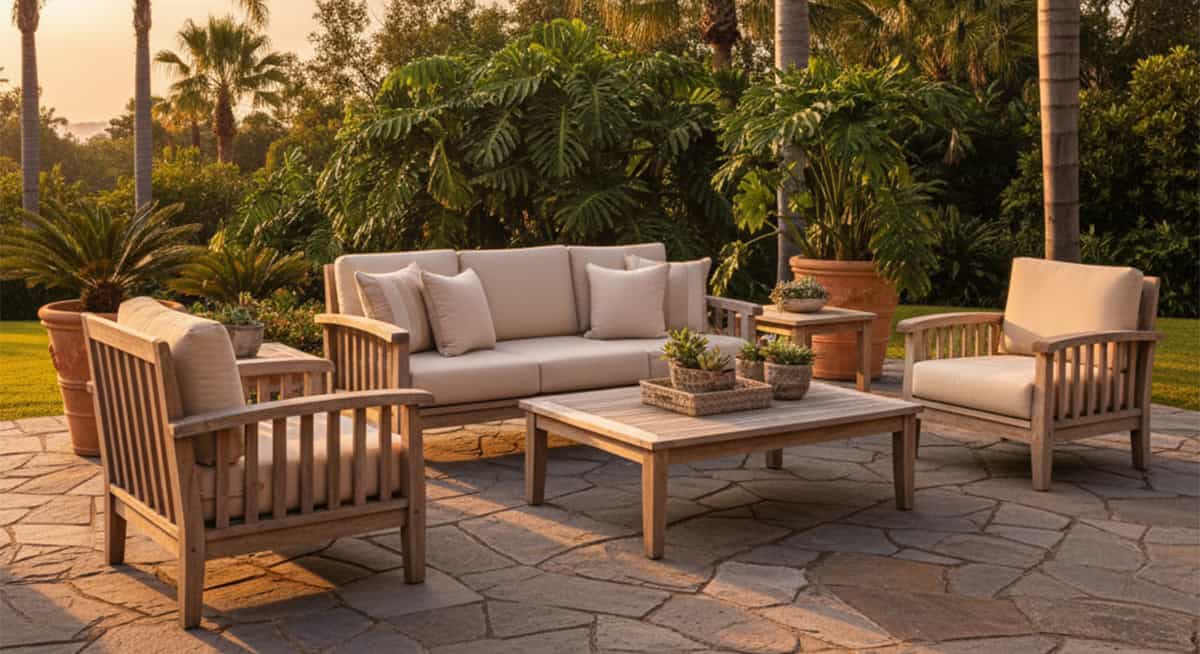
Knowing how to arrange outdoor furniture is the key to transforming a simple patio or garden into a true outdoor oasis. It’s about more than just placing a table and chairs; a thoughtful outdoor furniture layout determines the flow, functionality, and overall feel of your space. A strategic arrangement can make a small balcony feel spacious and a large deck feel intimate and inviting.
This guide will walk you through the professional principles of how to arrange outdoor furniture, helping you create functional zones, establish a clear flow, and transform your outdoor area into a true extension of your home.
The Foundation: Core Principles for Arranging Outdoor Furniture
Before you move a single piece, consider these foundational design principles. They apply to any outdoor space, regardless of size or shape.
1. Define the Purpose: Create Functional Zones The first step in learning how to arrange outdoor furniture is to define how you’ll use the space. The most effective deck layout ideas involve dividing the area into “zones” based on function. Think of it as creating different rooms outdoors. Common zones include:
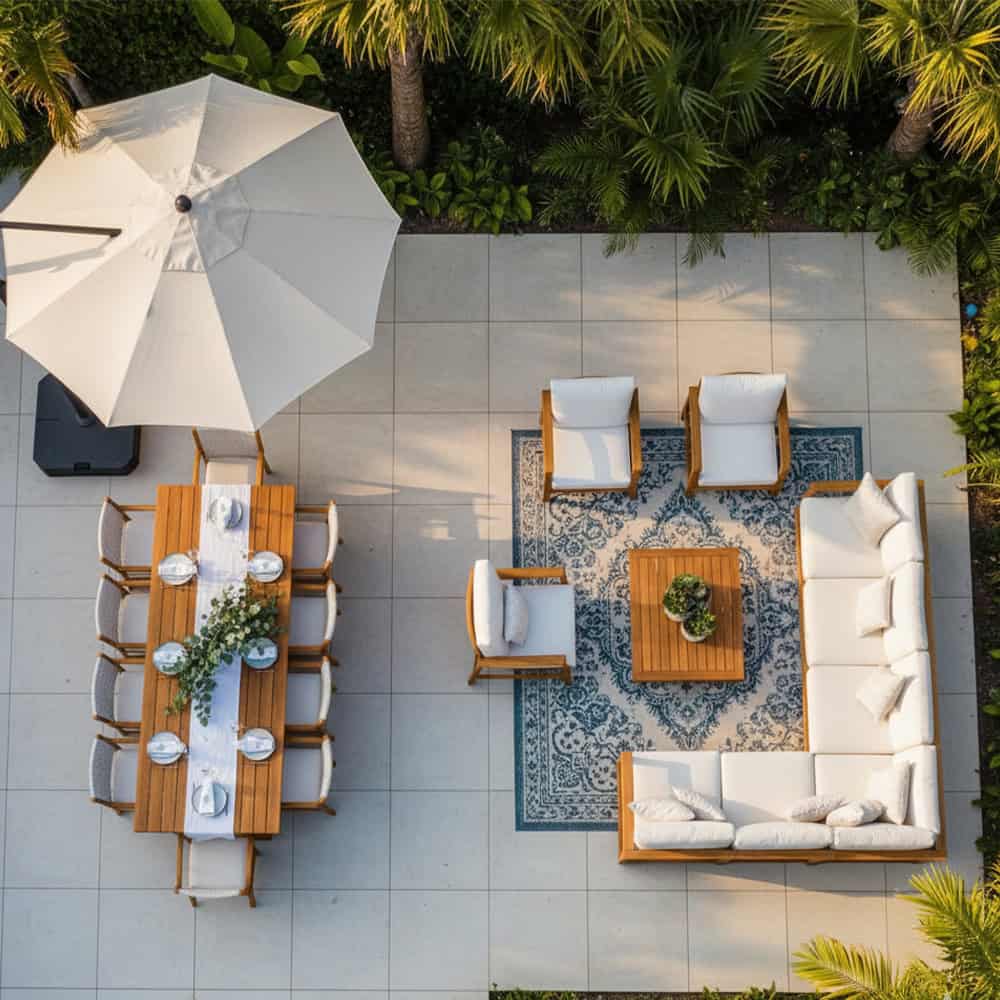
- The Conversation Zone: The social hub of your outdoor area, designed for comfortable interaction.
- The Dining Zone: A dedicated space for enjoying meals, from casual lunches to formal dinners.
- The Relaxation Zone: A quiet nook for sunbathing, reading, or enjoying a moment of peace.
Even in a small space, you can create distinct zones using a rug or clever garden furniture placement to visually separate the areas.
2. Establish a Focal Point Every well-designed room, indoors or out, has a focal point that draws the eye and anchors the arrangement. Your furniture should be arranged to complement this feature. An outdoor focal point could be:
- A stunning view
- An outdoor fireplace or fire pit
- A water feature
- A large, statement piece of furniture
Arrange your primary seating to face the focal point to create a natural and engaging layout.
3. Ensure Clear Traffic Flow Functionality is just as important as aesthetics. Your patio arrangement must allow for easy and intuitive movement. As you plan, imagine walking through the space.
- Create Clear Pathways: Ensure there are unobstructed paths from the house to each zone and between zones.
- Allow for Conversational Distance: In a seating area, chairs and sofas should be close enough for easy conversation without feeling cramped.
- Mind the Chair Rule: In a dining zone, leave at least 3 feet of space behind each chair so guests can comfortably pull their chairs out and walk behind the table.
Practical Layouts for Every Zone
Once you have the principles down, you can start arranging your furniture to create specific, functional zones.
The Conversation Zone: Fostering Connection
This is where you’ll host guests and spend time with family. The goal for this outdoor seating arrangement is to create an intimate and comfortable setting.
- The Classic L-Shape: Use a sectional sofa or place a sofa and a loveseat in an “L” configuration. Add a coffee table in the center to anchor the space. This is a versatile layout that works well in corners.
- The U-Shape: For larger spaces, a U-shaped arrangement with a sofa and two armchairs facing each other is incredibly inviting and promotes conversation.
- Face-to-Face: A simple and elegant layout with two sofas or four armchairs facing each other, with a coffee table or fire pit in between.
The Outdoor Dining Zone: For Memorable Meals
This zone is all about comfort and functionality in your outdoor garden area.
- Anchor with a Rug: Place a large outdoor rug under your dining set to visually define the space. The rug should be large enough for all chair legs to remain on it, even when pulled out.
- Consider the Sun: If possible, position your dining area where it will get shade during the hottest parts of the day. An umbrella is a must-have accessory for any dining zone exposed to the sun.
- Lighting is Key: For evening meals, ensure the area is well-lit. String lights overhead can create a magical, cafe-style ambiance.
The Relaxation Zone: Your Personal Retreat
This space is for unwinding.
- Chaise Lounges: The quintessential piece for sunbathing or reading. Arrange two chaise lounges side-by-side with a small side table in between for drinks and books.
- The Quiet Corner: Even a small corner can become a retreat. Place a single comfortable armchair and an ottoman, add a small table for a drink, and surround it with potted plants for a sense of seclusion.
Maximizing Small Spaces: 7 Simple Hacks
Learning how to arrange outdoor furniture in a small space like a balcony or a compact patio requires a more strategic approach. The goal is to create the illusion of space while maximizing functionality.
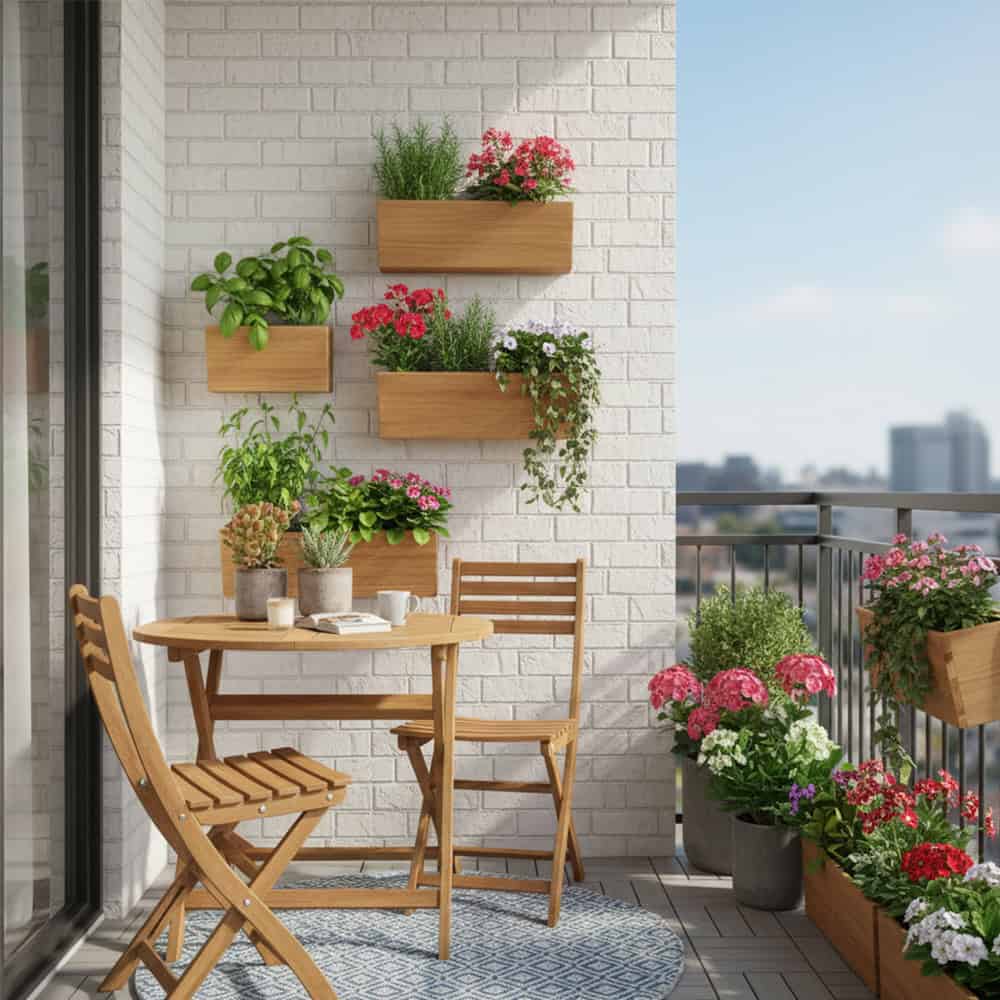
- Choose Multipurpose Furniture: A storage ottoman can serve as seating, a footrest, and a place to store cushions. A bench can work for both dining and lounging.
- Use Furniture with Exposed Legs: Pieces with slender, raised legs create a sense of openness by allowing you to see the floor underneath, making the area feel less crowded.
- Go Vertical: Draw the eye upward. Use tall, narrow planters or install wall-mounted shelves for plants and decor to utilize vertical space.
- Create Zones with a Rug: Even in a small area, a rug can define a specific zone and make the layout feel more intentional.
- Opt for a Round Table: A round dining or coffee table has a smaller physical footprint and no sharp corners, making it easier to navigate around in a tight space.
- Use a Cohesive Color Palette: Sticking to a light, unified color scheme for your main furniture pieces and accessories can make a small space feel larger and more serene.
- Prioritize Essentials: Don’t try to cram too much in. Choose one primary function for your small space—be it a cozy two-person dining spot or a single comfortable lounge chair—and furnish it perfectly.
By applying these principles, you now have the professional insight on how to arrange outdoor furniture to create a space that is not only beautiful and stylish but also perfectly suited to your lifestyle. A well-considered garden furniture placement is the final step in bringing your outdoor vision to life.
From Perfect Placement to Lasting Protection
Now that you’ve designed the perfect layout for your outdoor oasis, the next step is ensuring your beautiful teak furniture lasts a lifetime. A proper arrangement is just the beginning; understanding how to care for your investment through the seasons is key to its longevity.
For a comprehensive overview of everything from routine cleaning and weatherproofing to professional repair techniques, be sure to read our Complete Teak Furniture Care Guide: Maintenance, Repair, and Refinishing.
0 Comments